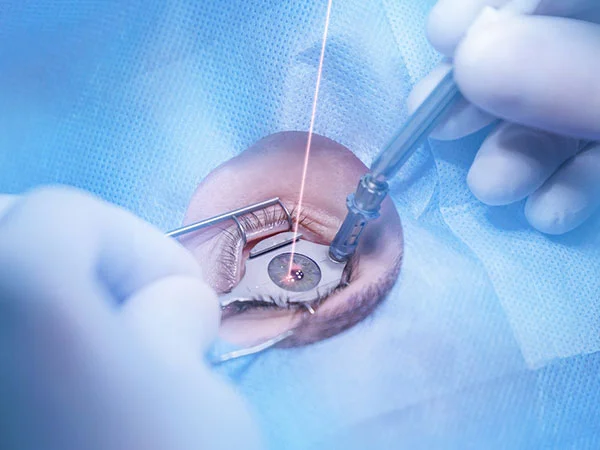
Phacoemulsification vs Laser-Assisted Cataract Surgery
Both advanced phacoemulsification and laser-assisted cataract surgery are safe and effective treatment options for cataracts. The most appropriate procedure depends on your eye condition, visual needs, and your ophthalmologist’s clinical evaluation.
| Feature |
Advanced Phaco Surgery |
Laser-Assisted Cataract Surgery |
| Technology |
Uses ultrasound energy to remove the cloudy lens through a micro-incision. |
Uses femtosecond laser technology to assist selected surgical steps with enhanced precision. |
| Incision |
Small manually created micro-incision by the surgeon. |
Laser-assisted incision with computer-guided planning. |
| Precision |
Highly precise when performed by experienced ophthalmologists. |
Enhanced precision for selected surgical steps using laser technology. |
| Recovery |
Quick recovery with minimal discomfort for most patients. |
Quick recovery depending on the patient’s eye condition and treatment plan. |
| Suitability |
Suitable for most cataract patients. |
Recommended for selected patients after a comprehensive eye evaluation. |
| Lens Options |
Supports monofocal, multifocal, toric, and premium intraocular lenses. |
Compatible with premium intraocular lens (IOL) options for personalised vision correction. |
Causes of Cataract Formation
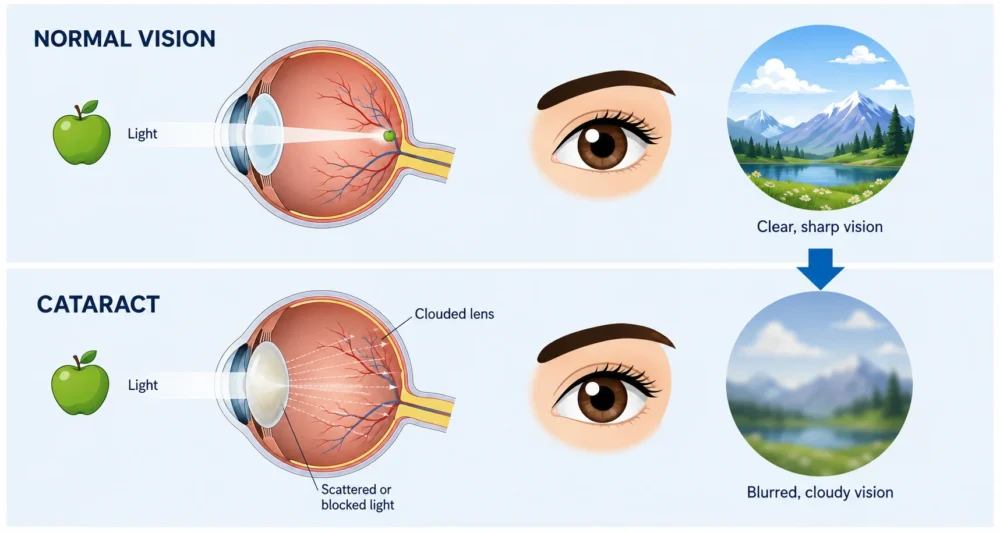
Cataracts can develop due to a combination of age-related changes, medical conditions, lifestyle habits, and environmental factors. Understanding these risk factors can help in early detection and timely treatment.
- Ageing: The natural ageing process causes proteins in the eye’s lens to break down, gradually leading to lens clouding and reduced vision.
- Diabetes & Medical Conditions: Conditions such as diabetes and hypertension can increase the risk of developing cataracts at an earlier stage.
- Eye Injury: Previous eye trauma or inflammation can damage the natural lens and contribute to cataract formation.
- Excessive UV Exposure: Long-term exposure to ultraviolet (UV) rays without proper eye protection may accelerate cataract development.
- Long-term Steroid Use: Prolonged use of corticosteroid medications may increase the likelihood of cataract formation.
- Smoking & Lifestyle Factors: Smoking, excessive alcohol consumption, and poor nutrition can increase oxidative stress, affecting the clarity of the eye’s lens.
- Genetic Predisposition: A family history of cataracts may increase the risk of developing the condition.
Symptoms of Cataract
Cataracts usually develop gradually, and the symptoms become more noticeable as the condition progresses. Recognizing these early warning signs can help you seek timely treatment and preserve clear vision.
- Blurred Vision: Objects appear cloudy or out of focus, making reading, driving, and everyday activities more difficult.
- Difficulty Seeing at Night: Reduced vision in low-light conditions can make driving or walking after dark more challenging.
- Light Sensitivity: Bright lights, glare, and halos around lights may cause discomfort, especially while driving at night.
- Faded or Yellowed Colours: Colours may appear dull or lose their natural brightness, affecting overall visual clarity.
- Frequent Changes in Glasses Prescription: Vision may continue to worsen despite regular updates to your spectacles.
- Double Vision in One Eye: Some people may notice overlapping or multiple images when looking through one eye.
- Difficulty with Daily Activities: Reading, recognising faces, using digital devices, and performing detailed tasks may become increasingly difficult.
Types of Cataracts
Cataracts can develop in different parts of the eye’s natural lens. Identifying the type of cataract helps ophthalmologists recommend the most appropriate treatment and intraocular lens (IOL) option.
- Nuclear Cataract: Develops in the centre (nucleus) of the lens and is commonly associated with ageing. It gradually affects distance vision and may cause colours to appear yellowish.
- Cortical Cataract: Forms around the outer edge of the lens and progresses inward in a spoke-like pattern, often causing glare and difficulty with night vision.
- Posterior Subcapsular Cataract: Develops at the back of the lens, leading to blurred vision, increased light sensitivity, glare, and difficulty reading, especially in bright light.
- Congenital Cataract: Present at birth or develops during childhood due to genetic factors, infections during pregnancy, or certain medical conditions.
- Secondary Cataract: May develop following eye surgery, prolonged steroid use, diabetes, or other underlying eye diseases and medical conditions.
Cataract Diagnosis & Tests
A comprehensive eye examination is essential to accurately diagnose cataracts and determine the most suitable treatment plan. At Retiora Eye Care, our specialists use advanced diagnostic technology to evaluate lens clarity, overall eye health, and the severity of vision impairment before recommending surgery.
- Visual Acuity Test: Measures the sharpness of your vision using standard eye charts to assess how cataracts are affecting your eyesight.
- Slit-Lamp Examination: Provides a magnified view of the eye’s structures, allowing detailed evaluation of the lens, cornea, and cataract progression.
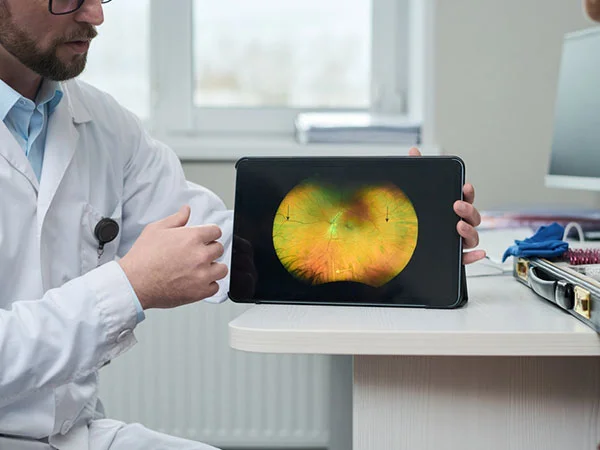
- Dilated Retinal Examination: Examines the retina and optic nerve after pupil dilation to identify any underlying retinal conditions.
- Tonometry: Measures intraocular pressure to screen for glaucoma and other pressure-related eye diseases.
- Refraction Test: Determines whether changes in your eyeglass prescription can improve vision and assesses the extent of visual impairment.
- Optical Biometry: Precisely measures the eye to calculate the most suitable intraocular lens (IOL) power for cataract surgery.
Cataract Diagnosis & Tests
A detailed eye examination helps diagnose cataracts accurately and assess their impact on your vision. At Retiora Eye Care, we use advanced diagnostic equipment to evaluate lens clarity, eye health, and determine the most appropriate treatment plan for every patient.
- Visual Acuity Test: Measures the sharpness of your vision using standard eye charts to determine how cataracts are affecting your eyesight.
- Slit-Lamp Examination: Uses a high-powered microscope to examine the cornea, lens, and other eye structures in detail.
- Dilated Retinal Examination: Allows the ophthalmologist to examine the retina and optic nerve for any underlying retinal conditions.
- Tonometry: Measures the pressure inside the eye to screen for glaucoma and other pressure-related eye diseases.
- Refraction Test: Determines the most accurate eyeglass prescription and evaluates the extent of vision impairment caused by cataracts.
- Optical Biometry: Accurately measures the eye to calculate the ideal intraocular lens (IOL) power for cataract surgery.
- Corneal Evaluation: Assesses the shape and health of the cornea to assist in selecting the most suitable surgical approach and IOL.
Stages of Cataract Development
Cataracts typically develop gradually over time. Understanding the different stages helps determine the right time for treatment and ensures the best possible visual outcomes.
-
Stage 1 (Early Cataract): Mild clouding of the natural lens begins, often without noticeable symptoms. Vision usually remains clear, and cataracts are commonly detected during routine eye examinations.
-
Stage 2 (Immature Cataract): The clouding becomes more noticeable, leading to blurred vision, increased glare, light sensitivity, and difficulty seeing clearly at night.
-
Stage 3 (Mature Cataract): The lens becomes significantly cloudy, causing substantial vision loss and making everyday activities such as reading, driving, and recognising faces more difficult.
-
Stage 4 (Hypermature Cataract): The cataract becomes advanced, increasing the risk of inflammation, elevated eye pressure, and other complications. Timely cataract surgery is recommended to restore vision and protect long-term eye health.
Cataract Treatment Options
The most appropriate treatment for cataracts depends on the severity of the condition and its impact on your daily activities. At Retiora Eye Care, our specialists recommend personalised treatment plans to restore clear vision and improve your quality of life.
- Prescription Glasses: Updated eyeglasses or contact lenses may improve vision temporarily during the early stages of cataracts.
- Anti-Glare Lenses: Special lenses can help reduce glare, improve contrast, and enhance visual comfort, especially in bright environments and while driving.
- Lifestyle Modifications: Wearing UV-protective sunglasses, maintaining good blood sugar control, quitting smoking, and following a healthy diet may help protect overall eye health.
- Regular Eye Examinations: Routine check-ups allow your ophthalmologist to monitor cataract progression and recommend treatment at the right time.
- Phacoemulsification Surgery: An advanced micro-incision procedure that removes the cloudy natural lens and replaces it with a premium intraocular lens (IOL) to restore clear vision.
- Laser-Assisted Cataract Surgery: For selected patients, femtosecond laser technology can assist specific stages of surgery, providing enhanced precision and customized treatment.
Types of Eye Surgery for Cataracts
The most suitable cataract surgery depends on the severity of the cataract, overall eye health, and your visual requirements. At Retiora Eye Care, our ophthalmologists recommend the most appropriate surgical technique to achieve the best possible visual outcomes.
- Phacoemulsification (Phaco Surgery): The most commonly performed cataract procedure, using ultrasound energy to break the cloudy lens into tiny fragments before replacing it with a premium intraocular lens (IOL). It offers faster healing and minimal discomfort.
- Micro-Incision Cataract Surgery (MICS): A minimally invasive technique performed through very small incisions, resulting in quicker recovery, reduced astigmatism, and enhanced surgical precision.
- Laser-Assisted Cataract Surgery (FLACS): Uses femtosecond laser technology to assist selected surgical steps with exceptional precision, making it suitable for selected patients.
- Extracapsular Cataract Extraction (ECCE): Recommended for advanced or very dense cataracts where the cloudy lens is removed through a slightly larger incision before implanting an intraocular lens.
Cataract Eye Surgery Procedure
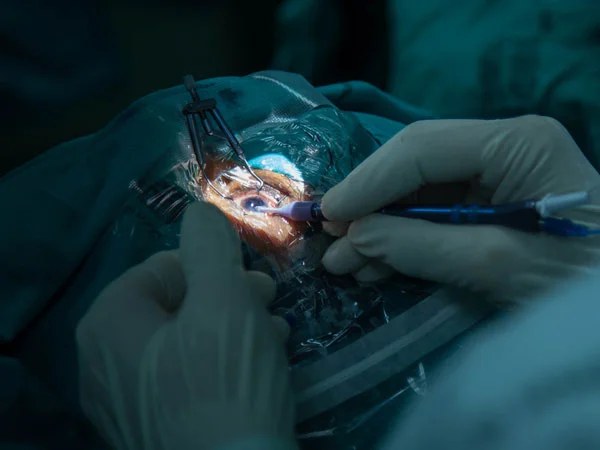
Cataract surgery is a safe, quick, and highly effective day-care procedure that typically takes 15–30 minutes per eye. At Retiora Eye Care, we use advanced surgical techniques and premium intraocular lens (IOL) technology to restore clear vision with minimal discomfort and a faster recovery.
- Comprehensive Pre-operative Evaluation: A detailed eye examination, including optical biometry and diagnostic tests, is performed to assess eye health and determine the most suitable intraocular lens (IOL).
- Local Anaesthesia: Numbing eye drops or local anaesthesia are administered to ensure a comfortable and pain-free surgical experience.
- Micro-Incision & Lens Removal: A tiny incision is created, and the cloudy natural lens is gently broken into small fragments using advanced phacoemulsification technology before being carefully removed.
- Premium IOL Implantation: A clear artificial intraocular lens (IOL) is implanted to restore vision and reduce dependence on glasses, depending on the selected lens type.
- Post-operative Care & Recovery: After a brief observation period, patients are discharged with eye drops, recovery instructions, and scheduled follow-up appointments to monitor healing.
Cataract Surgery After Care
Proper post-operative care is essential for a smooth recovery and the best visual outcomes. Following your ophthalmologist’s instructions carefully can help reduce the risk of complications and support faster healing after cataract surgery.
- Use Prescribed Eye Drops: Apply the recommended antibiotic and anti-inflammatory eye drops as directed to prevent infection and promote healing.
- Protect Your Eyes: Wear the protective eye shield or glasses advised by your doctor, especially while sleeping or when outdoors, to avoid accidental injury.
- Avoid Rubbing the Eye: Refrain from rubbing or applying pressure to the operated eye during the recovery period.
- Limit Strenuous Activities: Avoid heavy lifting, bending, vigorous exercise, and swimming until your ophthalmologist confirms it is safe.
- Attend Follow-up Appointments: Regular follow-up visits allow your doctor to monitor healing and ensure your vision is improving as expected.
- Resume Daily Activities Gradually: Most patients can return to normal daily activities within a few days, following their doctor’s advice and recovery guidelines.
Benefits of Cataract Surgery
Modern cataract surgery is one of the safest and most successful eye procedures, helping restore clear vision and improve overall quality of life. At Retiora Eye Care, advanced surgical techniques and premium intraocular lens (IOL) options are used to deliver excellent visual outcomes tailored to each patient’s needs.
- Clearer & Sharper Vision: Restores visual clarity by replacing the cloudy natural lens with a clear artificial intraocular lens (IOL).
- Improved Night Vision: Reduces glare and halos, making driving and other activities in low-light conditions safer and more comfortable.
- Brighter & More Natural Colours: Enhances colour perception, allowing colours to appear more vibrant and true to life.
- Reduced Glare & Light Sensitivity: Minimises discomfort from bright lights, sunlight, and oncoming vehicle headlights.
- Greater Independence from Glasses: Premium IOL options may reduce the need for spectacles, depending on your vision requirements.
- Enhanced Daily Activities: Makes reading, driving, recognising faces, using digital devices, and other routine tasks easier.
- Better Quality of Life: Improves confidence, independence, and overall visual comfort for long-term eye health and wellbeing.
Side Effects & Recovery After Cataract Surgery
Cataract surgery is a safe and highly successful procedure with a smooth recovery for most patients. Mild side effects are usually temporary and improve as the eye heals. Following your ophthalmologist’s post-operative instructions helps ensure a comfortable recovery and excellent visual outcomes.
- Dry Eyes: Temporary dryness, irritation, or a gritty sensation may occur during the initial healing period and is usually relieved with lubricating eye drops.
- Light Sensitivity: Increased sensitivity to bright light is common for a short time after surgery and gradually improves as the eye recovers.
- Mild Blurred Vision: Vision may remain slightly blurry for a few days while the eye adjusts to the new intraocular lens (IOL) and healing progresses.
- Floaters: Some patients may notice temporary floaters during recovery. Persistent or sudden increases should be evaluated by an ophthalmologist.
- Mild Redness or Inflammation: Slight redness or inflammation is common after surgery and is typically controlled with prescribed anti-inflammatory eye drops.
- Posterior Capsule Opacification (PCO): In some patients, a secondary clouding may develop months or years after surgery. This can be effectively treated with a quick and painless YAG laser capsulotomy.
- When to Contact Your Doctor: Seek immediate medical attention if you experience severe pain, sudden vision loss, increasing redness, excessive swelling, or persistent flashes of light.
Prevention & Eye Health Tips
Although age-related cataracts cannot always be prevented, adopting healthy lifestyle habits and scheduling regular eye examinations can help protect your vision, slow cataract progression, and support long-term eye health.
- Eat a Balanced, Nutrient-Rich Diet: Include leafy green vegetables, colourful fruits, nuts, and foods rich in vitamins C, E, lutein, and omega-3 fatty acids to support healthy eyes.
- Protect Your Eyes from UV Rays: Wear high-quality UV-blocking sunglasses and a wide-brimmed hat when outdoors to reduce harmful ultraviolet exposure.
- Quit Smoking: Smoking increases oxidative stress and significantly raises the risk of developing age-related cataracts.
- Manage Diabetes & Other Health Conditions: Maintaining healthy blood sugar levels and controlling chronic medical conditions can help reduce cataract progression.
- Schedule Regular Eye Examinations: Comprehensive eye check-ups help detect cataracts early and monitor changes before they significantly affect vision.
- Stay Physically Active & Hydrated: Regular exercise, adequate hydration, and a healthy lifestyle contribute to better eye health and overall wellbeing.
- Avoid Prolonged Eye Strain: Follow the 20-20-20 rule during digital screen use and ensure adequate lighting while reading or working.
Conclusion
Cataracts are one of the leading causes of vision impairment, but they can be treated safely and effectively with modern cataract surgery. Early diagnosis, timely intervention, and the right intraocular lens (IOL) selection play a vital role in restoring clear vision and improving quality of life.
At Retiora Eye Care, our experienced ophthalmologists combine advanced diagnostic technology with personalized treatment plans to deliver safe, precise, and compassionate eye care. If you are experiencing blurred vision or any symptoms of cataracts, schedule a comprehensive eye examination and take the first step toward clearer, healthier vision.