
PEDIATRIC & ADULT STRABISMUS CAR

Advanced Squint Treatment in Bangalore

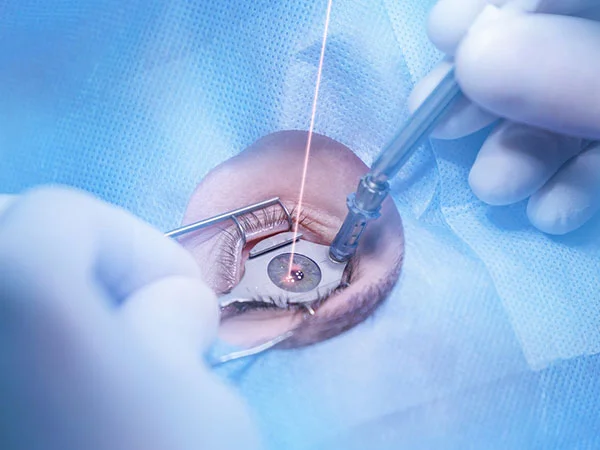
Squint (strabismus) affects eye alignment and vision. Our specialists offer advanced diagnosis and personalized treatments, including eye muscle surgery, to restore proper alignment and improve visual function.
Retiora Eye Care Specialist
Book FREE, Doctor Appointment
Schedule your appointment with our experienced eye specialists. Our team will contact you shortly to confirm your visit.

Expert Ophthalmologists

Advanced Technology

Personalized Care

Understanding Squint Surgery

Squint Surgery

Squint, also known as strabismus, is a condition in which the eyes do not align properly and may point in different directions. It can affect both children and adults, leading to problems with vision, depth perception, eye coordination, and self-confidence. Early diagnosis and timely treatment are essential to prevent long-term vision problems. At Retiora Eye Care, our experienced ophthalmologists provide comprehensive squint evaluation and personalized treatment, including glasses, vision therapy, and advanced eye muscle surgery, to restore proper eye alignment and improve visual function for patients of all ages.
Suitable for

Types of Squint Eye

Squint (strabismus) is classified based on the direction in which the affected eye turns. Identifying the type of squint helps determine the most appropriate treatment approach.

Esotropia

One eye turns inward toward the nose. This is one of the most common types of squint, especially in young children.

Exotropia

One eye turns outward, away from the nose. It may occur occasionally or become constant over time.

Hypertropia

One eye deviates upward, affecting eye coordination and binocular vision.

Hypotropia

One eye turns downward, making it difficult for both eyes to work together effectively.

Squint may also be classified as intermittent, where the eye turns only occasionally, or constant, where the misalignment is present all the time and requires prompt medical evaluation.

Causes of Squint Eye

Squint can develop due to problems affecting the eye muscles, nerves, or the brain’s ability to coordinate eye movements. Identifying the underlying cause helps determine the most effective treatment plan.

  • Congenital Conditions: Some children are born with weak eye muscles or nerve abnormalities that cause squint from infancy.
  • Refractive Errors: Uncorrected farsightedness or other vision problems can increase the risk of eye misalignment.
  • Neurological Disorders: Conditions such as cerebral palsy, Down syndrome, stroke, or brain injuries can affect the nerves controlling eye movement.
  • Eye Muscle Disorders: Diseases such as myasthenia gravis or thyroid eye disease (Graves’ disease) may weaken the eye muscles.
  • Eye Injury or Trauma: Injuries affecting the eye muscles or surrounding tissues can lead to permanent misalignment.
  • Family History: A genetic predisposition increases the likelihood of developing squint, particularly when close family members are affected.

Symptoms of Squint Eye

The symptoms of squint (strabismus) vary depending on the type and severity of the condition. Early diagnosis can help prevent long-term vision problems and improve treatment outcomes.

  • Misaligned Eyes: One eye may turn inward, outward, upward, or downward while the other focuses normally.
  • Double Vision: Adults may experience double vision, making reading, driving, and other daily activities difficult.
  • Head Tilting or Eye Strain: Frequent head tilting, eye fatigue, or headaches caused by the eyes trying to maintain proper focus.
  • Poor Depth Perception: Difficulty judging distances, affecting balance, sports, and everyday tasks.
  • Lazy Eye (Amblyopia): In children, untreated squint may lead to reduced vision in one eye.
  • Difficulty Focusing: Trouble maintaining clear and comfortable vision, especially during prolonged visual tasks.

Diagnosis of Squint Eye

A comprehensive eye examination helps determine the type, severity, and underlying cause of squint, allowing your ophthalmologist to recommend the most appropriate treatment.

Visual Acuity Test

Measures the clarity of vision in each eye and detects refractive errors that may contribute to squint.

Cover Test

Evaluates eye alignment by observing how each eye moves when the opposite eye is covered.

Prism Test

Measures the degree of eye misalignment to assist in treatment planning and surgical decisions.

Eye Movement Assessment

Examines the function of the eye muscles and their coordination during different eye movements.

Refraction Test

Identifies refractive errors such as farsightedness, nearsightedness, or astigmatism that may affect eye alignment.

Binocular Vision Assessment

Evaluates how well both eyes work together to achieve proper depth perception and single vision.

Non-Surgical Squint Treatment

Not all cases of squint require surgery. Depending on the cause and severity, several non-surgical treatment options can help improve eye alignment, strengthen vision, and prevent further complications.

Prescription Glasses

Correct refractive errors such as farsightedness, reducing eye strain and improving alignment in many patients.

Eye Patching

Patching the stronger eye encourages the weaker eye to work harder, helping treat lazy eye (amblyopia), particularly in children.

Vision Therapy

Customized eye exercises improve eye muscle coordination, focusing ability, and binocular vision.

Prism Glasses

Special prism lenses help reduce double vision by improving the way light enters the eyes and enhancing visual alignment.

Botulinum Toxin (Botox) Injections

In selected cases, Botox injections temporarily relax overactive eye muscles, helping improve eye alignment without surgery.

Treatment of Underlying Conditions

Managing conditions such as thyroid eye disease or neurological disorders may help improve squint caused by underlying medical problems.

Squint Eye Surgery

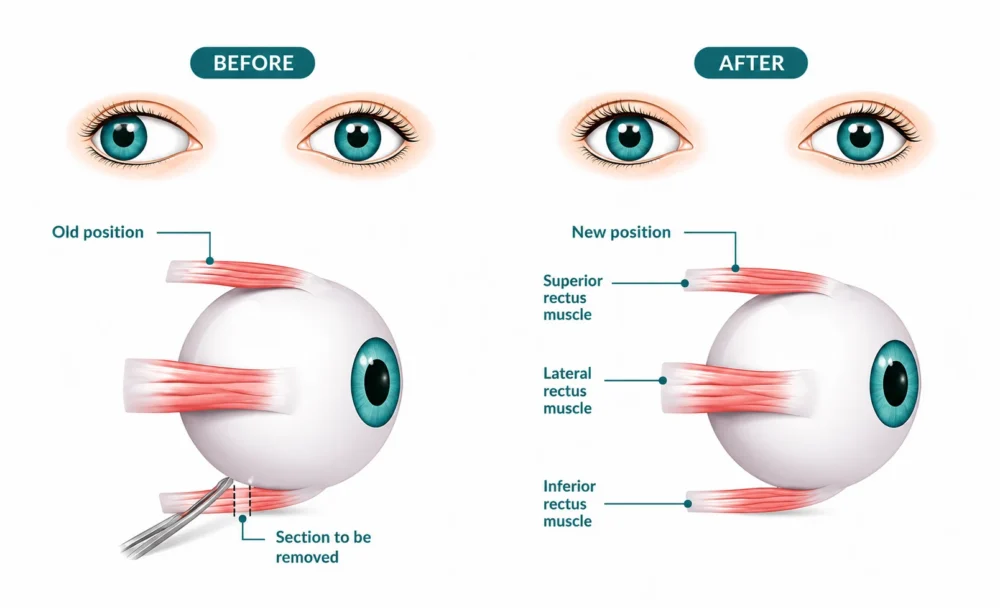
Squint surgery is recommended when glasses, vision therapy, or other non-surgical treatments do not provide adequate eye alignment. The procedure corrects the position of the eye muscles, helping both eyes work together while improving vision, depth perception, and cosmetic appearance.

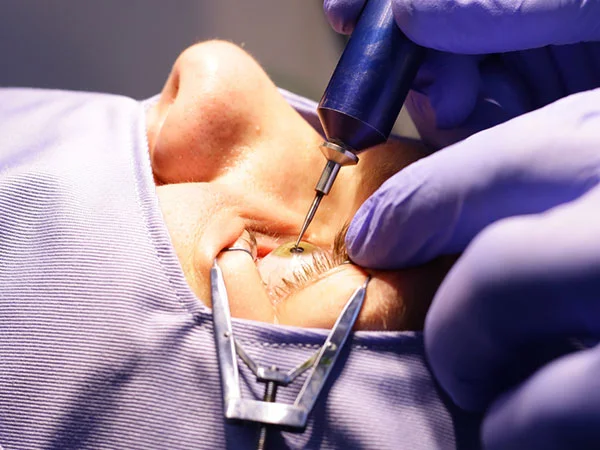
At Retiora Eye Care, our experienced ophthalmic surgeons perform advanced squint surgery using modern microsurgical techniques. Most procedures are completed as day-care surgeries with minimal discomfort, allowing patients to return home the same day.

Muscle Recession

An overactive eye muscle is repositioned further back on the eye to reduce its pulling force and restore balanced alignment.

Muscle Resection

A weakened eye muscle is shortened to increase its strength, improving eye movement and coordination.

Muscle Repositioning

Depending on the type of squint, one or more eye muscles are carefully adjusted to achieve optimal alignment and binocular vision.

Adjustable Sutures

In suitable adult patients, adjustable sutures allow fine-tuning of eye alignment after surgery, improving surgical precision and outcomes.

Recovery After Squint Surgery

Recovery after squint surgery is generally smooth, with most patients resuming normal daily activities within a few weeks. Although the eyes begin healing immediately, complete visual adaptation and binocular coordination may take several weeks to a few months, depending on the individual.

Recovery Period What to Expect
Immediately After Surgery Mild discomfort, redness, watering of the eyes, and temporary blurred or double vision are common. Prescribed eye drops and medications help promote healing and prevent infection.
1–2 Days Eye alignment is reviewed during the first follow-up visit. Patients should avoid rubbing the eyes, swimming, heavy lifting, and prolonged screen time.
1–2 Weeks Redness and swelling gradually improve, while eye comfort increases. Most patients can return to school or office work based on their ophthalmologist’s advice.
3–4 Weeks Eye alignment continues to stabilize, and vision becomes more comfortable. Vision therapy or eye exercises may be recommended for selected patients.
6–8 Weeks Most patients achieve significant healing and can safely resume regular physical activities. Routine follow-up examinations help monitor eye alignment and vision.
After 3 Months Final surgical results are usually achieved. In some patients, binocular vision continues to improve over the following months with ongoing follow-up and, when required, vision therapy.

Tips for a Smooth Recovery After Squint Surgery

Proper post-operative care plays an important role in achieving the best surgical outcome. Following your ophthalmologist’s instructions helps promote faster healing, maintain eye alignment, and reduce the risk of complications.

  • Use Medications as Prescribed: Apply antibiotic and anti-inflammatory eye drops exactly as directed to prevent infection, reduce inflammation, and support healing.
  • Attend Follow-Up Visits: Regular check-ups allow your ophthalmologist to monitor healing, assess eye alignment, and recommend additional treatment if required.
  • Follow Activity Restrictions: Avoid rubbing your eyes, swimming, heavy lifting, contact sports, and other strenuous activities until your doctor confirms it is safe.
  • Continue Vision Therapy: If advised, perform prescribed eye exercises or vision therapy sessions to improve eye coordination and strengthen binocular vision.
  • Protect Your Eyes: Wear protective eyewear outdoors when necessary and maintain good eye hygiene to reduce irritation during recovery.
  • Report Unusual Symptoms: Contact your ophthalmologist immediately if you experience severe pain, increasing redness, sudden vision loss, excessive discharge, or persistent swelling.

Why Choose Retiora Eye Care for Squint Treatment?

Successful squint treatment requires accurate diagnosis, advanced surgical expertise, and personalized care. At Retiora Eye Care, our experienced ophthalmologists provide comprehensive evaluation and evidence-based treatment for both children and adults using the latest diagnostic and surgical techniques.

  • Experienced Eye Specialists: Our ophthalmologists are trained in diagnosing and managing various types of squint (strabismus) with personalized treatment plans.
  • Advanced Diagnostic Technology: Comprehensive eye alignment, binocular vision, and ocular muscle assessments help ensure accurate diagnosis and effective treatment planning.
  • Modern Surgical Techniques: We perform advanced eye muscle surgeries using precision microsurgical techniques designed for safe treatment, quicker recovery, and improved eye alignment.
  • Comprehensive Care for All Ages: From pediatric squint management to adult strabismus correction, we provide complete care tailored to each patient’s visual needs.
  • Personalized Follow-up & Vision Rehabilitation: Regular follow-up visits and, when required, vision therapy help maximize surgical outcomes and support long-term binocular vision.

Risks & Complications of Squint Surgery

Squint surgery is a safe and commonly performed procedure with a high success rate when carried out by experienced ophthalmologists. However, like any surgical treatment, it carries certain risks. Understanding these potential complications helps patients make informed decisions and recognize when to seek medical attention.

  • Infection: Although uncommon, infection can occur after surgery and is usually managed effectively with prescribed antibiotic medications.
  • Undercorrection or Overcorrection: In some cases, the eyes may remain slightly misaligned or become overcorrected, requiring additional treatment or, rarely, further surgery.
  • Temporary Double Vision: Some patients experience double vision during the healing period as the brain adapts to the new eye alignment. This usually improves with time.
  • Eye Muscle Slippage: Rarely, an operated eye muscle may shift from its intended position, requiring surgical revision.
  • Scar Tissue Formation: Excessive scarring around the eye muscles may restrict eye movement in uncommon cases.
  • Anesthesia-Related Risks: As with any procedure requiring anesthesia, there is a small risk of allergic reactions or other anesthesia-related complications.
  • Rare Vision Complications: Permanent vision-threatening complications are extremely rare, particularly when surgery is performed by experienced eye surgeons using modern surgical techniques.

Careful pre-operative evaluation, expert surgical care, and regular follow-up appointments significantly reduce the risk of complications and help achieve the best possible visual and cosmetic outcomes.

Squint in Children vs Adults

Squint can occur at any age, but its causes, treatment goals, and outcomes differ between children and adults. Early treatment in children helps develop normal vision, while treatment in adults focuses on improving eye alignment, relieving symptoms, and enhancing quality of life.

Aspect Children Adults
Common Cause Usually present from birth, developmental factors, or uncorrected refractive errors. Often caused by injury, nerve disorders, thyroid eye disease, stroke, or untreated childhood squint.
Treatment Goal Restore eye alignment, develop binocular vision, and prevent lazy eye (amblyopia). Improve eye alignment, relieve double vision, and enhance visual comfort and appearance.
Visual Adaptation The developing visual system adapts well when treated early. Adaptation may take longer, especially if the squint developed later in life.
Treatment Options Glasses, patching, vision therapy, and surgery depending on the condition. Prism glasses, vision therapy, Botox injections, and squint surgery based on the underlying cause.
Recovery Generally heals quickly with excellent long-term visual outcomes when treated early. Recovery is usually smooth, though binocular vision may require additional rehabilitation in some cases.
Expected Outcome High chance of achieving normal eye alignment and healthy visual development. Significant improvement in eye alignment, appearance, and quality of life, with reduced double vision in many patients.

Note: Treatment outcomes depend on the type of squint, the patient’s age, the duration of the condition, and timely intervention. A comprehensive evaluation by an experienced ophthalmologist helps determine the most appropriate treatment plan.

Prevention & Early Detection of Squint

Although not every case of squint can be prevented, early detection and timely treatment significantly improve visual development and reduce the risk of permanent vision problems. Regular eye examinations are especially important for young children and individuals at higher risk.

  • Schedule Early Eye Examinations: Infants and young children should undergo routine eye screenings, particularly if eye misalignment persists beyond the first few months of life.
  • Recognize Early Warning Signs: Seek immediate evaluation if a child frequently squints, tilts the head, closes one eye, or complains of blurred or double vision.
  • Regular Vision Screening: School-age children and adults should have periodic comprehensive eye examinations to detect vision problems and eye alignment disorders early.
  • Monitor High-Risk Individuals: Premature infants, children with developmental or neurological conditions, and those with a family history of squint require closer ophthalmic follow-up.
  • Correct Refractive Errors Promptly: Timely prescription of glasses for conditions such as farsightedness can help reduce the risk of certain types of squint.
  • Don’t Ignore Adult Symptoms: Sudden double vision, difficulty moving the eyes, or newly developed eye misalignment should always be evaluated by an ophthalmologist without delay.

Restore Healthy Eye Alignment with Expert Squint Care

Squint (strabismus) is a treatable eye condition that can affect vision, depth perception, and overall quality of life. Whether it develops during childhood or adulthood, early diagnosis and appropriate treatment are essential for achieving the best possible outcomes.

At Retiora Eye Care, we provide comprehensive squint evaluation, advanced diagnostic technology, personalized non-surgical treatments, and modern eye muscle surgery for patients of all ages. Our goal is to restore proper eye alignment, improve visual function, and help you enjoy clearer, more comfortable vision with confidence.

Frequently Asked Questions

Can squint (strabismus) be treated without surgery?
Yes. Many cases of squint can be managed with non-surgical treatments such as prescription glasses, eye patching, vision therapy, prism glasses, or Botox injections. Surgery is recommended only when these treatments do not provide adequate eye alignment.
Early diagnosis and treatment are important, especially in children, as they help develop normal vision and prevent lazy eye (amblyopia). However, squint can also be successfully treated in adults to improve eye alignment, binocular vision, and quality of life.
Yes. Squint surgery is a safe and commonly performed procedure when carried out by experienced ophthalmologists. Like any surgery, it has some risks, but serious complications are rare, and most patients recover well with proper post-operative care.
Most patients can resume their normal daily activities within one to two weeks. Complete healing and stabilization of eye alignment generally occur over 6–12 weeks, depending on the individual’s condition and healing response.
Although squint surgery provides long-lasting results for most patients, a small number may experience recurrence or require additional treatment over time. Regular follow-up visits help monitor eye alignment and ensure the best possible outcome.
You should consult an ophthalmologist if you or your child has noticeable eye misalignment, double vision, frequent head tilting, poor depth perception, or difficulty focusing. Early evaluation allows timely treatment and improves the chances of successful vision correction.
Book FREE, Doctor Appointment
Schedule your appointment with our experienced eye specialists. Our team will contact you shortly to confirm your visit.
Treatment Information

Ready to Protect Your Vision?

Schedule a consultation with our experienced ophthalmologists and receive personalized care tailored to your vision needs.
OTHER SERVICES

Comprehensive Eye Care

Specialized retina care for diabetic eye disease, retinal tears, macular disorders, and other sight-threatening conditions using advanced diagnostic technology.
Early diagnosis and advanced diabetic retinopathy treatment help prevent vision loss through laser therapy, injections, and expert retinal care.
PRK
PRK (Photorefractive Keratectomy) laser eye surgery provides effective vision correction for patients with thin corneas
Enjoy minimally invasive SMILE laser eye surgery for myopia correction with quick healing, reduced dry eyes, and long-lasting vision improvement.
Book Your Free Eye Consultation

Schedule an Appointment

Take the first step towards clearer vision. Fill out the form below, and our team will contact you to confirm your appointment.